Does Cooking Together as a Couple Actually Bring You Closer?
It sounds like something you'd see on a Pinterest board between a sourdough recipe and a linen tablecloth. "Cook together, stay together." But is there anything real behind it — or is cooking together as a couple just a romanticized version of splitting chores?
As it turns out, quite a lot. And the reasons go deeper than just "spending time together."
What research actually says
Relationship researchers have consistently found that couples who engage in novel, collaborative activities report higher levels of relationship satisfaction than those who stick to familiar routines. The key word here is collaborative — not just proximity. Watching the same show counts as togetherness in a loose sense. Working toward something together is a different experience entirely.
Cooking hits several of those markers at once. It's mildly challenging. It requires communication. It produces a tangible, shared result. And crucially, it ends with a meal you both had a hand in — which creates a sense of joint accomplishment that passive activities simply can't replicate.
The problem with how most couples cook together
Here's the honest version: cooking together often doesn't feel like what it sounds like. In practice, it tends to look like one person running the show while the other stands around asking "what should I do?" — or worse, two people bumping into each other and quietly disagreeing about how long to sauté the onions.
The issue isn't the activity. It's the lack of structure. When roles aren't clear, cooking together can feel like a negotiation rather than a collaboration. Someone takes over, someone feels sidelined, and by the time dinner is on the table, the "date night" energy has quietly evaporated.
This is why the framing matters as much as the activity itself.
What actually makes it work
Think about what makes any collaborative project feel good: everyone knows what they're responsible for, there are moments where you come together, and the outcome belongs to both of you equally. Cooking is no different.
When couples divide a recipe thoughtfully — this part is yours, this part is mine, and here's where we do it side by side — something shifts. The kitchen stops feeling like a contest and starts feeling like a project you're both invested in. The small decisions ("does this need more salt?") become moments of genuine exchange instead of potential friction points.
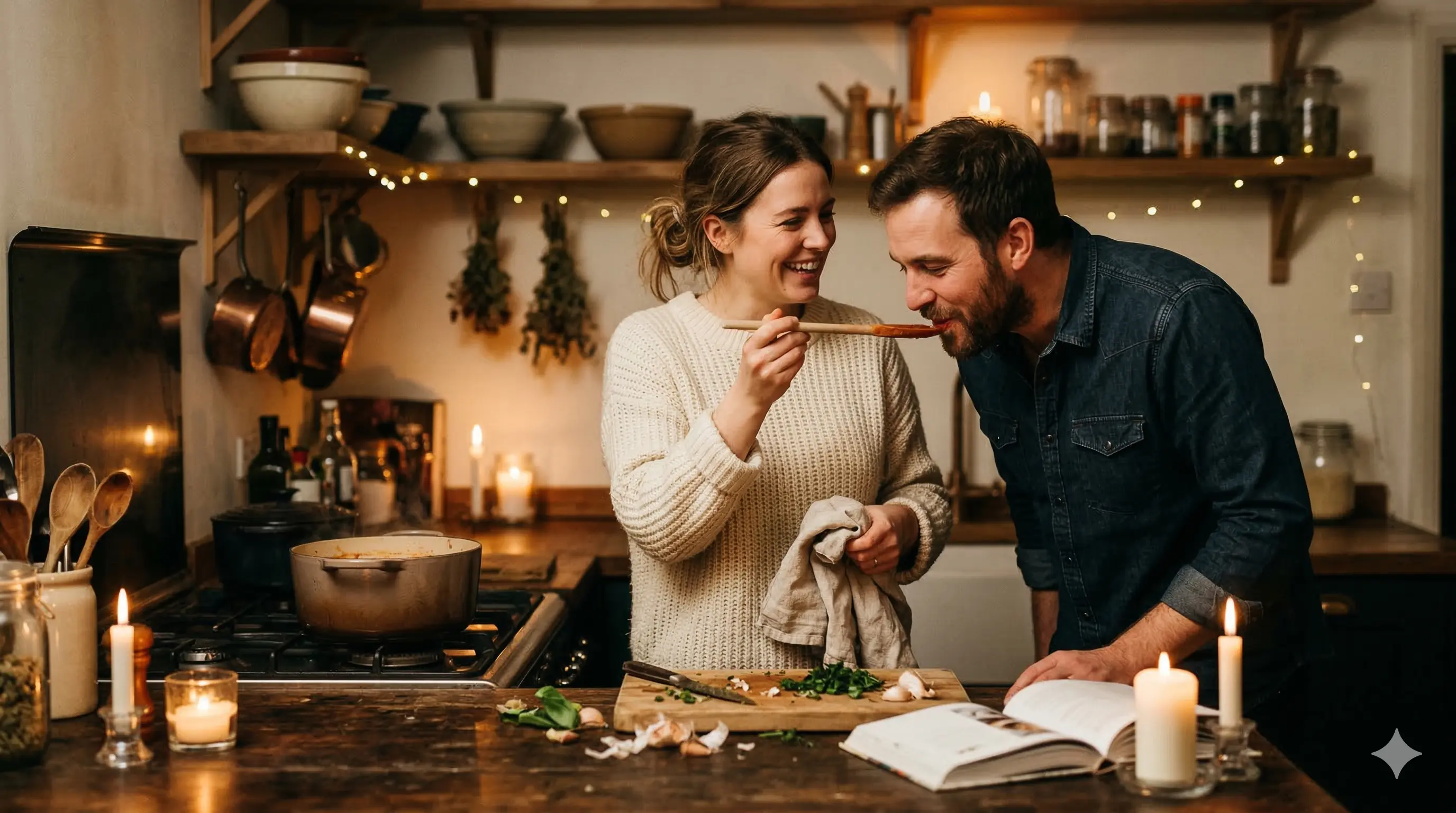
And then there's the sensory dimension. Cooking engages smell, taste, touch, and sound in ways that most activities don't. Those shared sensory experiences — tasting something off the same spoon, reacting to the same smell — create micro-moments of connection that are easy to overlook but quietly powerful.
It's also about what you're building over time
One evening in the kitchen won't transform a relationship. But repeated shared rituals — activities that become "your thing" as a couple — accumulate into something meaningful. Couples who cook together regularly often describe it as one of the few parts of their week where they're fully present with each other, away from screens and obligations.
That consistency is where the real value lies. Not in any single meal, but in the habit of choosing to do something together — and building a private vocabulary of inside jokes, preferred recipes, and remembered disasters that only the two of you share.
A few things worth trying
If you want to make cooking together actually feel like quality time, a few small adjustments help:
Divide tasks deliberately. Assign each person real ownership over a part of the meal — not just the most obvious prep work, but actual responsibility for a component.
Build in "us" moments. Identify steps where you have to work together — stirring something simultaneously, plating the dish, tasting as you go. These touchpoints break the parallel workflow and bring you back into the same moment.
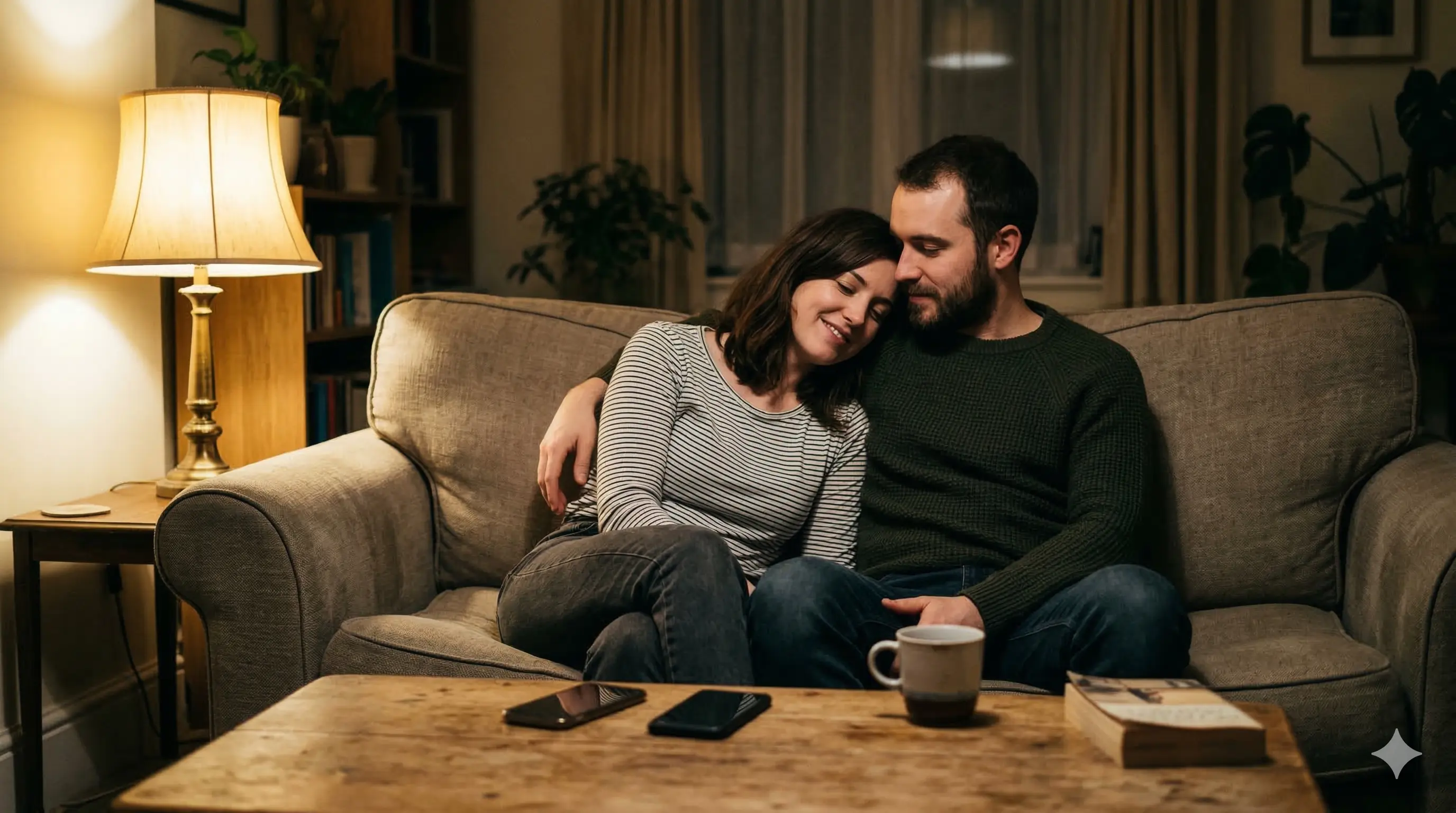
Put the phones away. It sounds obvious, but even having a phone nearby splits attention. The kitchen works best as a closed environment for the evening.
Let it be imperfect. The meals that become stories are rarely the ones that went flawlessly. Burnt garlic, collapsed soufflés, and overly ambitious pasta doughs are the raw material of shared memory.
The bottom line
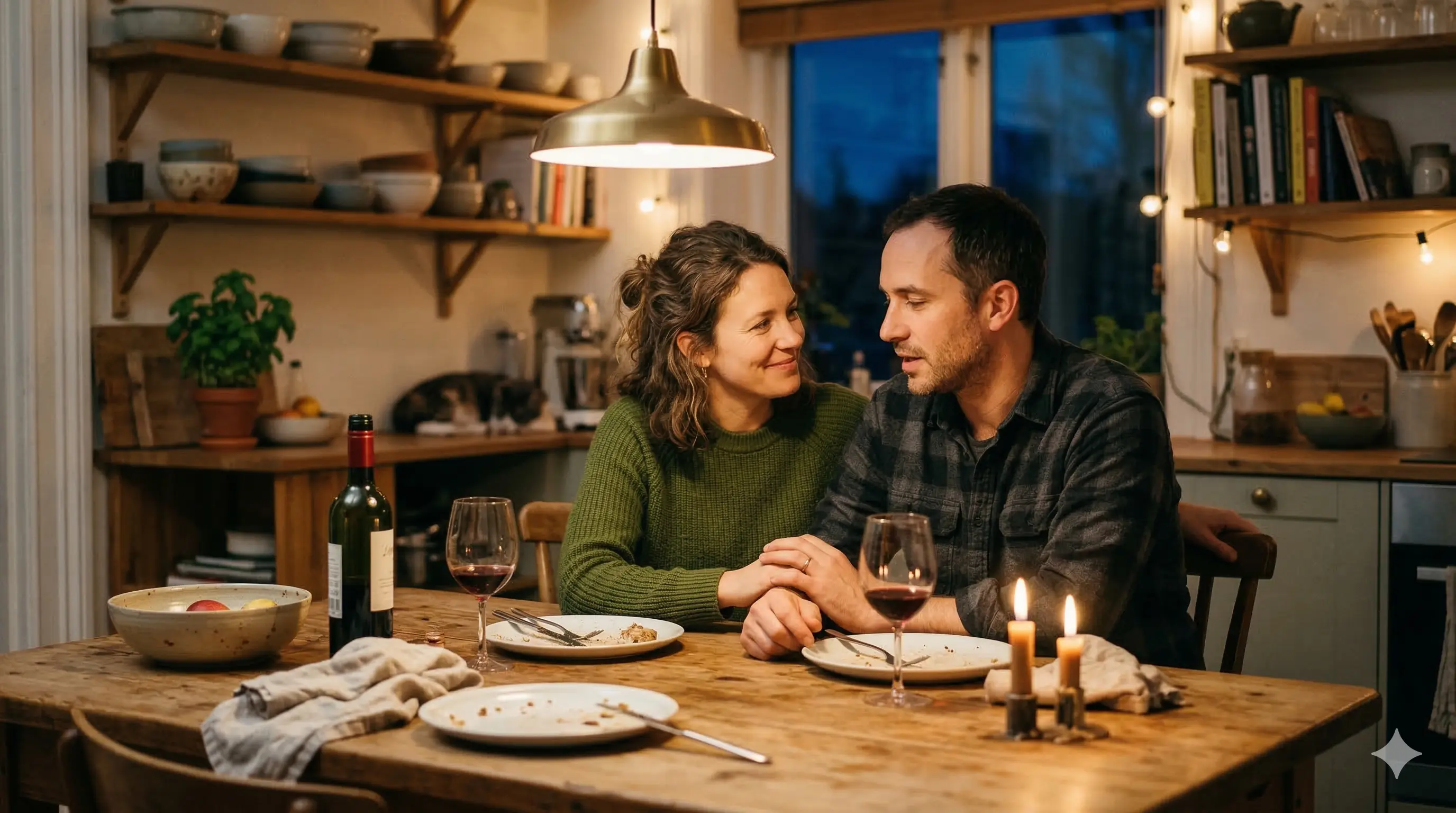
Cooking together as a couple works — but only if you treat it as a shared experience rather than a shared task. The difference is intentionality. When both people are genuinely involved, when the process matters as much as the result, and when the kitchen becomes a space for presence rather than productivity, something real happens.
It's not about making great food. It's about making something together — and remembering that you did.
Cookbond is built around exactly this idea. Every recipe is structured into three layers — what you handle, what your partner handles, and what you do together — so the collaboration is built in from the start, not something you have to figure out as you go.
Less negotiation in the kitchen. More connection at the table.